


Profile view of a bearded man wearing a black baseball cap and a dark gray T-shirt against a plain light background.

Is a cold-climate mini split worth it in Utah

Step 1 of 3: Equipment

Is a cold-climate mini split actually worth it in Utah winters

You already have a mini split and winter is making you wonder if it was the right call. Gas is the default heat source for most homes in Utah, so a mini split running through a cold January feels like an experiment. You want to know if it actually keeps up when temperatures drop, or if you are just running up the power bill while your furnace sits idle.

Yes, if it's rated for cold climates

A cold-climate mini split uses a compressor built to keep pulling heat from outside air well below freezing, down to temperatures a standard mini split can't handle. That's the difference that matters in Utah, where winter nights drop well below what a regular heat pump is rated for. A cold-climate model keeps producing heat instead of leaning entirely on backup resistance coils, which cost more to run. Since power here is cheap, running one alongside a gas furnace, or using it as the main heat for a room, can make sense financially even in January. The unit still loses some capacity as it gets colder outside, so on the harshest nights it may not carry the whole load by itself. That's normal, not a sign something's wrong.

A white wall-mounted mini-split air conditioner unit installed high on a beige interior wall below white crown molding, with a window and woven shade at the left edge showing green foliage outside.
A cold-climate mini split holds its output down to low outdoor temperatures and still covers the room without help.
A dusty, stained white wall-mounted mini-split air conditioner indoor unit installed high on a plain off-white interior wall near the ceiling.
A unit that cakes up with dust loses airflow and strains to hold the same room, no matter how cold-rated it is.

How a cold-climate mini split heats

  • A cold-climate mini split uses a compressor that can ramp its speed up rather than just switching on and off at one fixed output.
  • Below a certain outdoor temperature the compressor has to work harder to pull heat from air that has less of it to give.
  • The outdoor unit runs a defrost cycle every so often, briefly reversing to melt ice off its coil before switching back to heating.
  • A cold-climate model keeps its heating capacity rated down to around 5 degrees Fahrenheit, where a standard unit falls off well before that.
  • The indoor head reads the room temperature right where it hangs, so a unit placed far from where you sit will cycle differently than one placed close to it.
  • Gas furnaces heat air at a fixed rate and push it through ducts, while a mini split heats the room directly without any ducts involved.

A standard mini split compressor runs at one speed, on or off. A cold-climate model has a compressor that ramps up as it gets harder to pull heat out of the outdoor air, which is what lets it keep working on a night that would stall a regular unit. That extra effort shows up as the outdoor temperature drops. Below a certain point, the unit is pulling heat from air that simply has less of it to give, so it runs longer and harder to hold the same room temperature. Every so often the outdoor coil ices up, and the system reverses itself for a few minutes to melt that off before it goes back to heating. You might notice the outdoor fan stop and steam rise off the unit. That's normal, not a fault. What separates a cold-climate unit from a standard one is where its rated output falls off. A standard unit loses most of its heating capacity well above freezing. A cold-climate model is rated to keep producing close to its full output down around 5 degrees Fahrenheit, which matters on the handful of nights a Utah winter gets that cold. Inside, the head unit reads the temperature right at its own location, not the room as a whole, so where it's mounted changes how often it cycles. A gas furnace heats air at a fixed rate and sends it through ducts to every room. A mini split heats only the room it's in, directly, with no ducts at all.

A white wall-mounted mini-split air conditioner indoor unit with dark louvered vents, installed near the ceiling on a beige wall below white crown molding.
Before you get your mini split installation
A white wall-mounted mini-split air conditioner on a beige interior wall, with a window at left showing trees and a wooden fence, and dark wood flooring below.
After you get your mini split installation
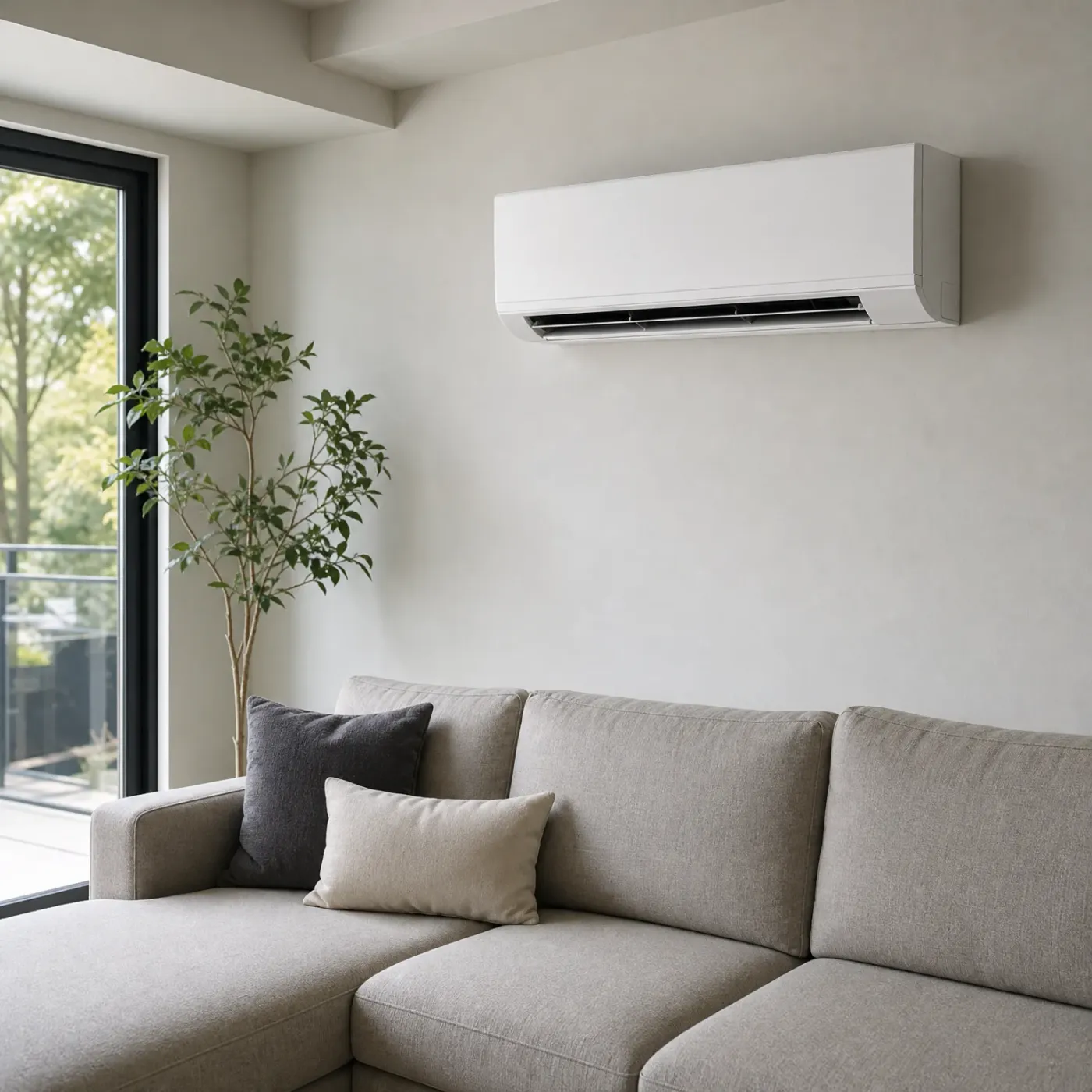
A white wall-mounted mini-split indoor unit on a pale interior wall above a gray sectional sofa with cushions, next to a potted leafy tree and a floor-to-ceiling window showing green trees outside.

Get your mini split to the right pro

Skip collecting and comparing quotes for the new mini split.

Get in touch with a local installer about a new mini split.

Find my pro

There's no charge for the request.

A woman in a cream cardigan and jeans stands with one hand raised facing an open front door of a gray horizontal-siding house, with a black lantern wall light, a potted shrub with yellow flowers, and a stone-faced porch column.

What this looks like in your house this winter

On the coldest mornings, watch what the mini split actually does. If it keeps up and the room stays warm without the gas furnace kicking in to help, it's doing its job. If you notice the room losing ground, or the outdoor unit running nonstop without catching up, that's worth paying attention to before the next cold snap.

Checking whether it's sized and installed right for your house takes more than a glance at the unit. A contractor who installs these regularly can look at your specific setup, the room it serves, how the furnace backs it up, and tell you whether what you have is working as it should. Instead of calling around and explaining your situation more than once, you can get matched with someone who takes on that kind of job and have them reach out to you directly.

A living room corner with a beige upholstered armchair holding navy and striped cushions, a small round wooden side table with a carved bowl and a potted green plant, a framed landscape picture on a pale wall, built-in shelving, and a curtained window.
A white wall-mounted mini-split indoor unit installed high on a gray interior wall, with a window at left and part of a light gray sofa with a dark cushion at lower right.

Running clean

A mini split like this one near the ceiling, clear vents and steady airflow, is set up to actually hit its cold-climate rating. It pulls in room air, reads the load, and adjusts the compressor speed to match. That's what lets it carry a Utah winter morning on its own.


A white wall-mounted mini-split air conditioner indoor unit with visible dust and staining along its lower vent, installed on a plain pale wall.

Choked with buildup

Dirt and mold along the vents and lower casing block the air the unit needs to breathe. The compressor can still ramp up, but it's pulling through a clogged coil, so less heat gets into the room for the same effort. No cold-climate rating accounts for a unit that's dirty.

Why does your mini split struggle on the coldest mornings

Stand near the indoor unit before sunrise on a cold morning. If the air coming out feels barely warm, or the fan runs but the room doesn't climb, something's off. Listen for the outdoor unit cycling on and off instead of running steady, that's a sign it's not holding its speed the way a cold-climate compressor should. Check the vents for a layer of dust or the outdoor coil for frost that isn't defrosting on its own. None of this is dangerous, but a unit that can't keep up means your gas furnace is quietly picking up the slack every time it dips, and you're paying for backup heat you shouldn't need.

A white wall-mounted mini-split air conditioner unit installed high on a plain beige wall near the ceiling, with empty wall space to the right.

Defrost cycles are normal, not failure

On a cold, damp morning you might see the outdoor unit stop and frost melt off the coils, with no warm air inside for a few minutes. That's the defrost cycle clearing ice off the coil so it can keep pulling heat from the air. It happens more in the low 30s than at colder, drier temperatures. If it clears and heating resumes, the unit is doing what it's built to do.

A white wall-mounted mini-split air conditioner indoor unit on a plain light-colored wall, with a beige curtain at the right edge of the frame.

The gas furnace still has a job

Most homes in Utah heat with gas, and a cold-climate mini split doesn't need to replace that on the coldest nights. Many households run the mini split as the main source and let the furnace cover the hours when outdoor temperatures drop furthest. Checking how the two actually split the load during a hard freeze tells you more than any rating number printed on the unit.

Power costs 13.02 cents per kilowatt-hour statewide

At 13.02 cents per kilowatt-hour, running your mini split through the winter costs less here than it would in most states. That's worth knowing if you've been favoring the gas furnace out of habit. Let the mini split carry more of the load on mild days and check what that does to the bill.

EIA-861 2025 statewide residential average

A cold-climate mini split earns its keep in Utah if it's installed right and kept clean, and it struggles for the opposite reasons, not because the rating was a lie. If yours is holding the room on cold mornings without the furnace stepping in, it's doing what it was built to do. If it's not, the fix is usually in the install or the filter, not the equipment itself. Figuring out which one is the problem means finding someone who can look at your specific unit, your ductwork or lack of it, and how it was set up, rather than guessing from a forum thread. That usually means calling a few contractors, explaining the same symptoms over and over, and trying to sort through quotes that don't quite match up. You don't have to do that part. Getting matched with a contractor who knows cold-climate systems and has them look at what's actually happening in your house settles the question for good, one way or the other.

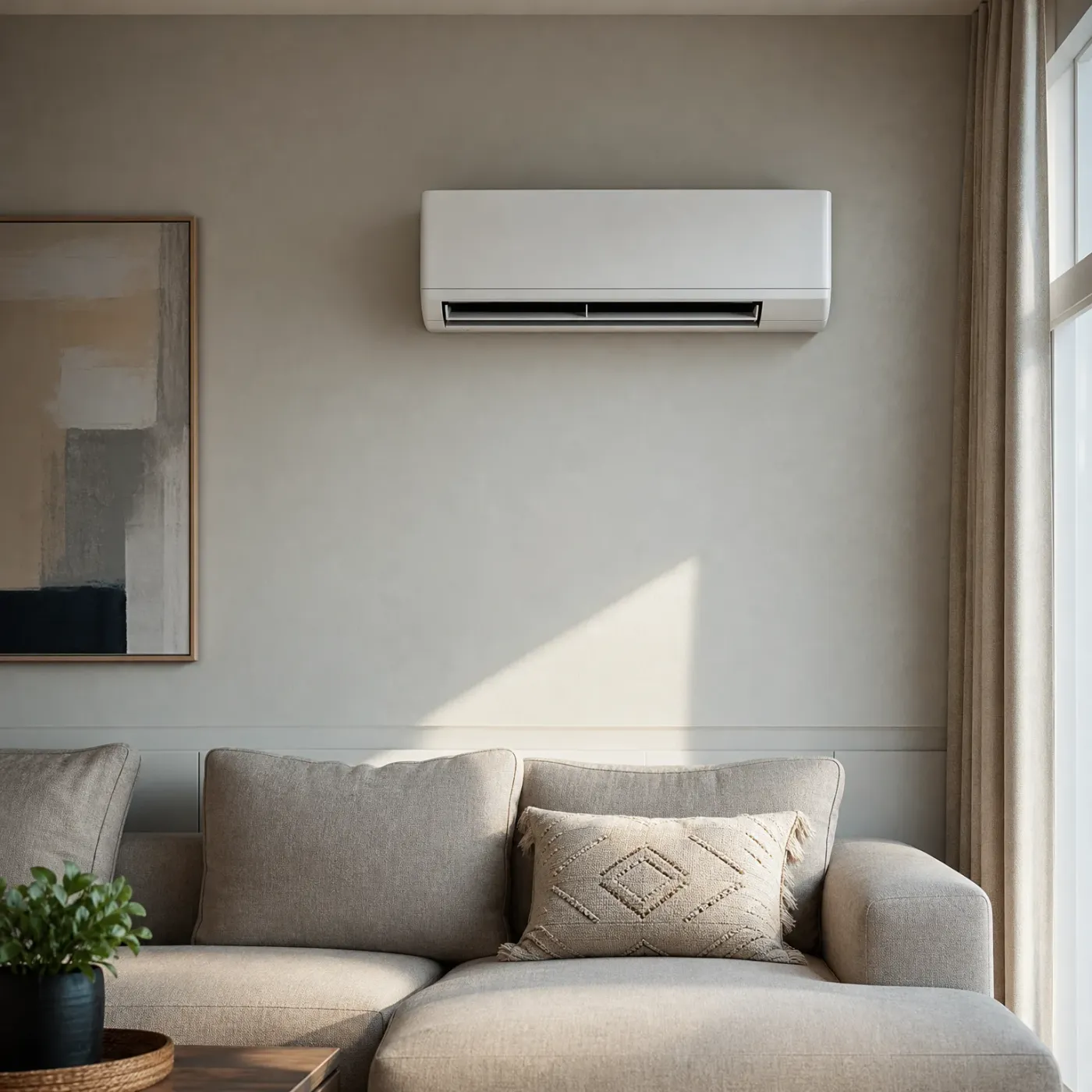
A white wall-mounted mini-split indoor unit on a light gray wall above a beige sectional sofa with a patterned cushion, beside a framed abstract artwork and a curtained window.

The right pro for this job

Get a mini split pro

One form replaces the calls you'd make to find a mini split pro.

You only hire the pro if you want to.